The Andrew Lees Trust logo

Project Radio


‘Projet Radio’ is a rural radio communications network for development funded by the European Commission. The project aims to deliver education and information to isolated rural populations in the South of Madagascar via radio broadcast.

In particular, to empower rural producers, women and children who live in some of the poorest climatically harsh areas of the South, to improve their food security, alleviate the effects of poverty and increase general standards of living.

Over three quarters of the rural population are illiterate, and villagers have few means to learn how to improve their situation and reduce their economic and social vulnerability. However, aural learning traditions in Madagascar mean the local people have a far greater capacity than Western audiences to listen to radio and remember details of key messages.

Main Communication Strategies


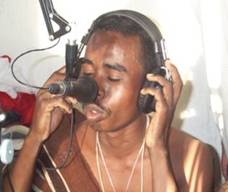
Ejeda FM Station

The project has developed a participative approach using radio which is designed to respond to villagers information needs and produce solution orientated educational broadcasts in local language.

The project currently collaborates with 48 local partners, NGO’s and service providers who deliver development initiatives in Tulear and Fianarantsoa Provinces, associated as the ‘Partners for Communication and Information for Development’ (PCID). The PCID is involved in all aspects of the production of radio programmes, ensuring relevant technical content is in synergy with regional development initiatives. They also help to distribute radios with village listening groups.

Programmes cover a range of topics including cattle rearing, animal husbandry, food security, farming, natural resource management, environment, healthcare, HIV AIDS awareness, mother and child health, family welfare, education and culture. Since the project’s further expansion in 2006, an average of 33 new programmes are produced Listening Groupeach month in local language and distributed to 24 local FM radio stations in Tulear and Fianarantsoa Provinces who broadcast the programmes in exchange for radio equipment.

The project has formally affiliated 21 of these local FM radio stations in a rural radio network to broadcast the project programmes and improve FM signal strength and professional capacity through training and provision of equipment. Consequently the educational radio programmes reach approximately 500,000 people directly at a cost of less than one euro per head per year.

Villagers are able to listen to the programmes via Freeplay clockwork and solar powered radios which the project places with village ‘responsables’. Listening groups are formed around these radios and are requested to participate in programme research, production and monitoring.

Since Projet Radio’s inception in 1990, the project in association with the PCID has been able to:

  • Produce and broadcast 1882 programmes.
  • Distribute solar/clockwork radios to 3371 village listening groups.
  • Create two regional libraries (Tulear and Fianarantsoa Provinces).
  • Launch 6 Production Studios.
  • Provide more than93 external trainings in communication for development to over 1009 partners and field agents.
  • Associate 48 local NGO’s and service providers as PCID.
  • Affiliate 21 FM radio stations
  • Launch 2 new FM radio stations, upgrade 3 and improve the technical capacity of 18 rural FM stations.

Development Issues


Economic Development, Food security, Natural Resource Management, environment, health, HIV AIDS.

Key Points


The project commenced in 1999 with a pilot study to assess the information needs of isolated rural communities in the south of Madagascar and to identify methodologies for creating access to education and information using radio with the aim of helping local people improve their standards of living.

In 2002, using the lessons learned, Projet Radio scaled up to create a rural radio network for regional development.

From 2006 the project will  consolidate the rural radio network in the Tulear Province and commence replicating the network model in the Fianarantsoa Province.

In 2007 ALT in collaboration with MSS and funded by DFID published an evaluation study called "The Contribution of Radio Broadcasting to the Achievement of the Millennium Development Goals: Research Findings and Conclusions of a Study of the Andrew Lees Trust Projet Radio." View the studyListening Group

The overall conclusion of the research is that the project is achieving some notable success in changing and enhancing knowledge and attitudes on topics such as HIV/AIDS, family planning, mother and child health, environmental issues, social and administrative issues and gender inequality.

Radio is also having a positive impact on uptake of health services, enrolment in literacy classes, construction of environmentally-friendly woodstoves, tree-planting, agricultural yields, and awareness of strategies for poverty reduction through income generation and community associations.

Of particular interest is the data showing considerable differences between village communities who have access to information via radio and those who are information poor due to no media access.

Partners


Funding for ‘Projet Radio’ is provided by the European Commission. The Evaluation Study has been funded by DFID. Other key funding from national and international partners since the project inception includes the National HIV AIDS Council Madagascar (CNLS), UNICEF, FAO, PACT, British and American Embassies. The project works in collaboration with 48 local service providers/NGOS and 21 local FM radio stations all of whom participate in project activities and contribute to the health of the communications network

DFID study of ALT Projet Radio


Funding secured from DFID in 2005 has enabled ALT to undertake a lengthy study of the impacts of its EC funded ‘Projet Radio’ on rural populations in the south of Madagascar.

The study has shown that, with over seven years of programme development and broadcasting into rural communities, ALT ‘Projet Radio’ has had significant influence on the ability of local people to better understand and take up development information which can improve their lives.

Media Support solutions provided guidance, study design and analysis of the results of over eleven independent field research studies which look at how the project’s radio programming has tackled a number of Millennium Development Goals including : HIV AIDS awareness, gender, poverty and livelihoods, mother and child health, environmental degradation, literacy and provision of information.

o-o-o-o-o-o-o-o-o-o-o-o-o-o-o-o-o-o-o-o-o-o-o-o-o-o-o

Projet Radio/PCID Rural Radio Network for Development


Phase 1– Affiliation of community radio stations in the region


June 2003 saw the formal affiliation of 14 FM community radio stations with Projet Radio (PR) and The Partners for Communications and Information for Development (PCID)Radio Stations and Project Radio/PCID round table

The stations agreed to abide by the code of practice issued by the Ministry of Communication, and to work as a ‘radio network for development’ in the south. Guidelines for a democratic, non partisan approach in the stations was also validated by the partners and contracts were signed.

October 2003, each station received a CD player as Phase 1 of its affiliation and 14 CDS which contained approximately 14 programmes on each, covering all the themes of development in the sectors of food security, agriculture, natural resource management, conservation, health, HIV awareness, family welfare, culture and education.

Each station agreed a certain number of hours of broadcast for these programmes against the value of the equipment given, ensuring that education via radio would reach the Projet Radio/PCID target groups across the region.

Phase 2 – increase of FM signal across the region


Following a technical evaluation of all the radio stations in the region, Projet Radio/PCID partners met to discuss the access to FM radio signal for communities in their target zones of intervention. As a result certain areas were identified as needing a boost of FM signal. RFA Betioky station is upgraded by Projet Radio and with help from the US Embassy Mg

The eastern side of the province has been relatively well covered by local radio stations – Fort Dauphin to Ambovombe hosting 9 stations alone. However the western side from Tshiombe was less well resourced with a single station in Ampanihy covering only 20 kilometres, and another in Betioky – also with low transmission. Tulear being the largest city in the province already has three stations.

It was agreed to help provide two new stations – one in Tshiombe and one in Ejeda to cover the southern most part of the Androy region, and to meet the needs in the Mahafaly respectively.

Additional funding was sourced to assist the purchase of the materials, increasing what was made available in the EC budget to Projet Radio. Materials were specified and provided by Globecom SA, and materials were sent in March 2004.

Following customs clearance and preparation on the ground a two week installation phase took place in June 2004

Two engineers from Globecom , the ALT Projet Radio regional Coordinator and local consultant, set off to install the 2 new stations and upgrade three others (Betioky, Ampanihy and Ambovombe) and to provide a new studio for production for the partners in Tulear.

The work was completed by the end of June and formal openings of the stations took place on the 1st July in the presence of the Ministry of Communications Representative, the OMERT engineer (licencing in Mg) and the Head of Communications for the Committee National de Lutte Contre Le SIDA (CNLS- National Aids Committee)

Tsihombe station with Voron Kodonoho 100FM

The station 100FM Tshiombe

This station has been set up in collaboration with and thanks to the financial support of the CNLS (Committee Nationale de Lutte Contre le SIDA)- National Aids Committee of Madagascar – specifically to produce HIV radio programmes in partnership with projet Radio SIDA (see link) and to reinforce the field work of Assoc Voron Kodonoho who are actively teaching villagers about the threat of HIV AIDS in this region.

The station boasts a 500 watt transmitter, a digital production unit and on air studio and with the current mast height can reach up to 80 km in one direction. It is hoped to increase this by raising the height of the antenna – with the possibility of reaching up to 75,000 people.

To assist the listening, Projet Radio has supplied 50 wind up/solar radios for listening groups and 14 CD full of educational radio broadcast from projet Radio /PCID

First reports suggest the villagers are very happy to have the new station – local radio receivers are sold out in the shops, and already listeners are visiting the station and requesting re broadcast of some of Projet Radio/PCID programmes!

95FM station - Lutheran Hospital EjedaThis station has been set up in collaboration with the support of UNICEF – to broadcast HIV AIDS programmes and to develop educational messages for women and children health and welfare. Traditional practices in this region can have negative health impacts for young girls – they given their own small houses as soon as they begin to menstruate and are then visited by local men who will decide if they are ‘viable’ as wives, mothers or girlfriends. The local hospital has to regularly provide caesarian operations for girls of under 16 years of age (50% of operations) and also manage the large numbers of under age girls with ectopic pregnancies (usually resulting from STDs)

The station will help to educate the local people by broadcasting information and will support a field training exercise which increase debate about the local practices, create awareness about rights, and promote ways in which women can help themselves maintain sexual health and wellbeingThe 20 metre mast at the Lutheran Hospital, Ejeda.

The hospital provides the building, the station staff and a and reports suggest that the signal is reaching as far as Ampanihy to the east. The stations has a powerful transmitter, digital edit solution and on air studio.

The access to FM signal should provide opportunities for listening to up to 120,000 people. Projet Radio is providing 50 wind up/ solar radios for listening groups to receive the programming.

Additional support for the preparation and materials for this station has been provided by Zurich UK.

Forward


The project is discussing further supports to audit the maintenance of the stations and to ensure that station personnel have access to training – especially on technical issues and development of the station to ensure their durability

The project has also made a request to the National AIDS Committee to provide a further 1000 radios for the south (under their national programme), 500 for the areas of Tshiombe and Ejeda where the new stations create a demand for radios. A further 500 radios to meet the high demand from our PCID partners in Tulear to provide radios for their listening groups.

The new model radio is being distributed through the National AIDS Committee Mg (CNLS) as part of their national communications campaign

ALT Projet Radio gave a week’s training to CNLS regional reps on how to distribute the radio in their regions.

Help ALT to build the Rural Radio Network


Help ALT support this vital communications resource for development. The rural radio network is not yet self financing . This is part of the work of the project for the next two years – but you can help to maintain the resource and the work of ALT in the south to bring education and information by contributing to our work.

£25 will assist production of 14 educational programmes for villagers.
£50 will assist distribution of radios to village listening groups of up to 100 people each.
£100 will help to maintain broadcasting through the network over 2 months.

More information on how to help.


Lemur© The Andrew Lees Trust 1995 - 2008