AGM ACTION 2017

The Trust has attended many Rio Tinto AGMs over the years in order to raise issues about the Madagascar mine operated by  Rio Tinto’s subsidiary: Qit Minerals Madagascar (QMM),  and advocate on behalf of mine affected communities.

This year, The Trust joined forces with six other organisations committed to holding the company to account over QMM’s Biodiversity Offsetting programme in Madagascar, including: Andrew Lees Trust, Collectif Tany, Friends of the Earth, London Mining Network, Re:Common, War on Want and World Rainforest Movement.

( see also blog post for 19th April below)

Biodiversity Offsetting

The AGM in April 2017 action was planned around the visit to the UK of a representative from the village of Antsotso in the Anosy region, Southern Madagascar, in order that he could put his case to Rio Tinto and its shareholders at the AGM and explain the way he and his fellow villagers have lost their food security and livelihoods as a result of the ban on forest access created by QMM’s Biodiversity Offsetting programme.

Just weeks before the AGM, the local community representative, Msr Athanase, learnt that his visa application to the UK had been rejected, thus thwarting any chance he might have of bringing his problems to the attention of Rio Tinto shareholders from his very direct and personal experience. His application was rejected by the UK Government on the basis that he lacked the expertise and skills to talk about human rights and the environment.

The Guardian newspaper and The Times both covered the story of the UK Govt’s refusal of Msr Athanase’s visa.

However this did not deter efforts to bring the community’s issues to the attention of the company and a statement was read at the AGM by Mamy Rakotondrainibe of Collectif Tany ( see summary at  London Mining Network AGM Report).

Buffer Zone and Radioactivity Concerns

In parallel, the Director of Andrew  Lees Trust also asked questions of the Board surrounding the issue of encroachment of legally protected buffer zones around the current mine operation site and the related concerns of radioactivity pathways and how they are being managed. ( see summary below, and article at The Ecologist)

Summary; Extract of Rio Tinto AGM Questions to Board

Yvonne Orengo, from the Andrew Lees Trust, said that she wanted to talk about transparency. She welcomed that the company has become a leader in tax transparency and thinks shareholders will also want the company to be even more transparent about how the company conducts its business in countries where it operates, especially where there is weak governance, as in Madagascar, so that communities – like those mentioned earlier eg in relation to the Biodiversity offsetting – are not deleteriously affected by the company’s or its staff behaviours.

For example, she is aware from her experience of the Madagascar mine over many years that those who complain about what is happening, or particularly what is not happening around the mine in Madagascar, are harassed or intimidated. Yvonne had spent many hours with Rio Tinto executives in London discussing these matters over a period of many years.

She said she had two questions to raise and asked firstly why QMM had breached a legal buffer zone, in place under national law, to protect waterways that feed into the town and areas used by locals for drinking water and fishing, to create a man made, artificial extension of land into the buffer zone. These activities had been kept below the radar by the company but the evidence is there on Google Earth.

She then asked why there was no transparency over the radioactivity pathways of the mine. The company was rightly concerned about the health and safety of its employees, and that was welcome, but how conscious was the company of the threat to the health and safety of people in surrounding communities from mine tailings, especially given the slow progress on rehabilitation? The radioactivity question was pushed under the carpet twenty-two years ago. Yvonne was in the town at that time when local regional representatives were explaining how the company had assured people there were no concerns. However, the quantities of ilmenite being dredged, meant that the levels of radioactive NORM (e.g. Uranium and Thorium) from Zircon and Monazite by products are now very high and this should therefore be a concern. She asks the company to be more transparent on this subject and felt sure the shareholders would want that too, and not want to be earning dividends from the company if the price was placing local people’s health at risk.

J-S Jacques replied that the company had a broad range of monitoring devices. Water is constantly monitored and no pollution had been noticed. QMM also monitors radioactivity. He suggested that the best way forward was for him to meet with Yvonne and Mamy in May. He undertook to go on site so that he could see it with his own eyes.

Yvonne asked for an assurance that whatever is discussed in private meetings would be put into the public domain on what the company was doing about monitoring, including of findings on radioactivity. She said that the company’s biodiversity committee had resigned last year but that was still not in the public domain and shareholders probably did not know that this had happened. So she asked for an assurance that this kind of information would be made much more public in future. It is hard to hold QMM to account when information is not forthcoming, and the lack of transparency represents a reputational risk to Rio Tinto.

Jan du Plessis said that Rio Tinto believes in transparency. Unless the company is sensitive to the communities in which it operates, it will not be able to operate. He said that there had been many examples over the years when people had raised issues with the company at AGMs and they had taken these matters up. Meetings like the AGM serve a purpose because they provide a forum for people to make these kind of points, and the company takes them seriously.

You can listen to the full AGM here 

Follow Up: Meeting in May 

The CEO of Rio Tinto, Jean Sebastien Jacques asserted in front of shareholders that he wished to address all these questions in person and has requested a meeting with Collectif Tany, Andrew Lees Trust and London Mining Network in May.

Posted in Uncategorized | 1 Comment

SOLIDARITY WITH ANTSOTSO

April 8th 2017 ,   New Frontiers New Tricks : a day of discover, debate and dialogue about Biodiversity Offsetting

Hosted at Friends of the Earth and co-organised by The Andrew Lees Trust , Friends of the Earth, War on Want, London Mining Network, Re:Common, Collectif Tany and World Rainforest Movement the event set out to explore the realities of Biodiversity Offsetting projects and their  impacts on local communities.

The day was well attended and discussion was lively. A range of case studies were debated, including from UK and Mongolia.

A special  focus was given to the Antsotso community in Madagascar whose livelihoods and food security has been deleteriously affected by Rio Tinto’s QMM project which has imposed a ban on forest access and use of forest resources by the community.

Preventing the community from interacting with the forest in the their traditional ways has forced them to grow manioc on sandy beaches where the crop yields `are poor , leaving them unable to sustain their food supplies as before.

This community was already living on the edge, barely surviving, but able to manage with forest resources at their disposal. Now they will be criminalised for entering their own forest and face fines if they cut a tree to build a pirogue ( traditional wooden canoe used for fishing), hence their livelihoods too are affected.

The mining company is imposing these restrictions in order to claim the forest next to Antsotso as part of their Biodiversity Offsetting programme, a plan they claim will deliver a net positive impact to biodiversity in the region. The offset is meant to compensate for the loss of  a 6000 hectare swathe of indigenous trees, flora and fauna along the southeast coastline of the island.

An Italian NGO, Re:Common has been investigating the impacts of the Biodiversity Offsetting on the community and produced a report with World Rainforest Movement which was distributed and discussed at the event; they have also produced a video. Giulia Franchi and Alessandro Runci from Re: Common presented to the workshop and shared their experiences of the community and the process of their research.

The Trust adopts an ethical stance towards the mine and stands in solidarity with affected communities.

Links:

War On Want : The new colonialism

Re: Common and World Rainforest Movement on Rio Tinto’s Biodiversity Offsetting : a ‘double land grab’

Film Link : YOUR/ MINE

Collectif Tany and Re:Common on land grabbing in Madagascar

London Mining Network New Frontiers New Tricks

Friends of the Earth on the Madagascar mine: Development Recast

Posted in Uncategorized | Leave a comment

NEW FRONTIERS NEW TRICKS

At this event, on SATURDAY, 8TH APRIL 2017 activists, researchers, and NGOs and will be sharing testimony from communities across several continents, discussing these new threats to people and nature, and begin learning how to challenge them together.

Working with Friends of the Earth, London Mining Network, War on Want, and Re:Common, The Andrew Lees Trust is helping to draw attention to the plight of local communities who are carrying the cost of environmental destruction by multinational extractives projects, for example in Madagascar – learn more here 

book your place at EVENTBRITE by clicking here 

DRAFT SCHEDULE:

10.30 Arrivals/tea/cofee

11.00 Introduction to the day

11.10 Launch of New Frontiers, New Tricks report

11.20 Case studies of new ‘frontiers’ of sustainability, biodiversity offsetting and the financialisation of nature

11. 35 Questions

Tea / coffee break

12.00 A frontline testimony from Madagascar

12.30 Premiere of investigative video from Madagascar

12.45 Questions

13.00 Lunch

13.45 The international context: IUCN policy, EU strategy and the trend towards the financialisation of nature

Questions

Break-out sessions on the solutions to and arguments against mining’s new frontiers

15.15 Conclusions

15.40 Solidarity event – opportunity to show solidarity / support across the oceans

16.00 End

This event has been organised by: Andrew Lees Trust, Friends of the Earth, London Mining Network, Re:Common and War on Want.

Posted in Uncategorized | Leave a comment

ANDREW LEES ENVIRONMENTAL ESSAY PRIZE 2017

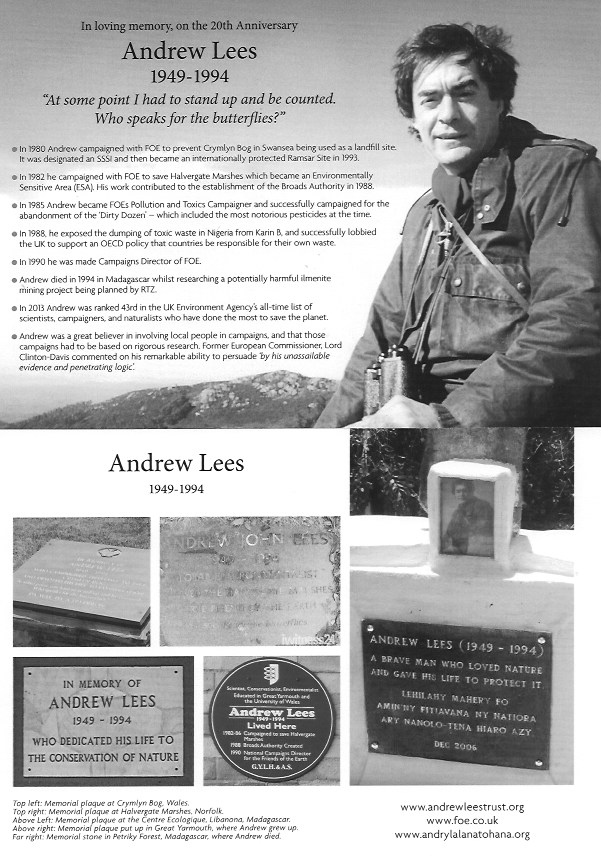
UKELA has announced details of the 2017 essay prize open to all students.  The prize is named after Andrew Lees who was Campaigns Director for Friends of the Earth and died in 1994 while campaigning  against open-cast mining in Madagascar

The 2017 Andrew Lees Prize Article Competition opened for entries from  14 March.

Please note extended submission date of 26 April 2017.

See: http://blogs.ucl.ac.uk/law-environment/2017/03/22/andrew-lees-environmental-essay-prize/


Posted in Uncategorized | Leave a comment

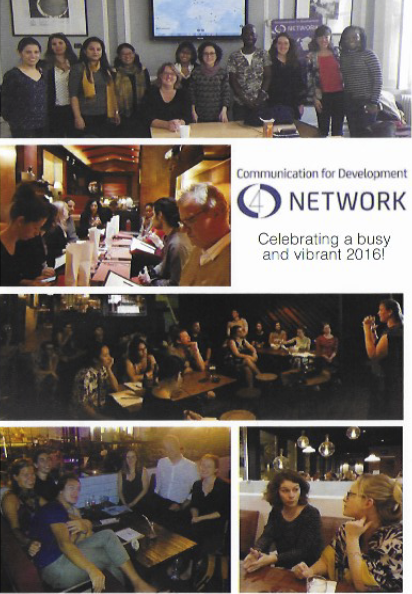
C4D Sight and Sound Festival December 2016

Andrew Lees Trust participated in and presented at this Communications For Development event, organised by the C4D Network on 20th December 2016 at Somerset House, London.

ALT shared its experience of using oral testimony to amplify the voices of isolated rural communities from southern Madagascar.

Sharing one of the films made by villagers from Faux Cap, the presentation highlighted the importance of understanding development from the perspective of local people and ensuring their voice in the design of policy, projects and social engagement for development.

ALT’s oral testimony project HEPA and resources can be seen  at www.andrewleestrust.org/hepa.htm

Posted in Uncategorized | Leave a comment

Brussels Book Launch – May 2016

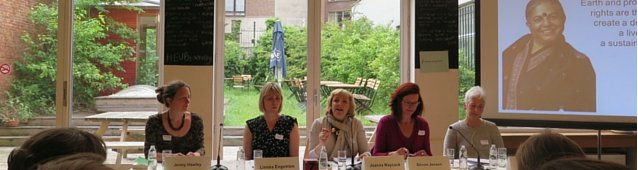
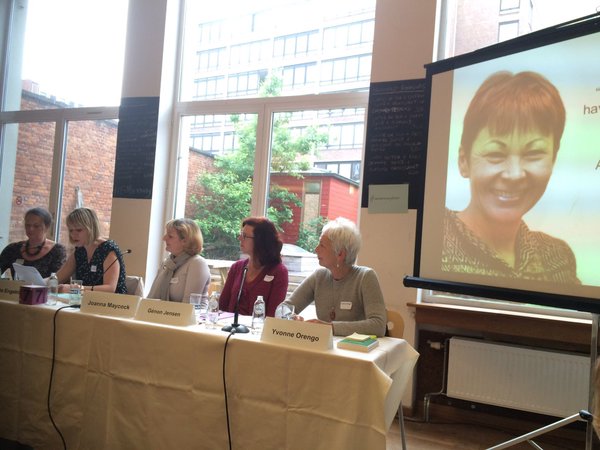
Also on Monday 23rd May, the  ALT Director, Yvonne Orengo, participated in the launch of the FoE book “Why Women Will Save The Planet” at the offices of Friends of the Earth Europe (FoEE), co-hosted by the European Women’s Lobby (EWL).

The book was published in November last year as part of a Friends of the Earth project called ‘Big Ideas Change the World’. This project is exploring some of the key issues that can help to transform our society and make faster progress towards the goals of environmental sustainability and well-being for everyone. Is women’s empowerment critical to environment sustainability? This is the question that the book aims to answer to.

women will save planet picSeehttp://www.womenlobby.org/Climate-is-not-gender-neutral-Inspiring-book-launch-celebrating-collaboration

women wiil save planet brusselsSharing a platform and the evening with with committed feminists and environmental campaigners, Yvonne talked about the role and importance of media in enfranchising women in local development and environmental management in Madagascar.

You can obtain a copy of the book via this link to the FoE shop :https://www.foeshop.co.uk/why-women-will-save-the-planet.

FoE have also issued a briefing paper on gender equality and environmental sustainability:

see:http://www.foe.co.uk/sites/default/files/downloads/gender-equality-environmental-sustainability-22099.pdf

Posted in Uncategorized | Leave a comment

Connecting the Environment and the EU – Brussels, May 2016

On Monday 234rd May Tony Long, ALT Trustee and Senior Expert at Global Governance Institute, participated in a Policy Forum about the environment and climate change in relation to the EU referendum and Brexit. The Policy Forum provided an opportunity to debate a new expert review of the academic evidence on these topics (available at http://environmenteuref.blogspot.be/) and what might change in the UK and at EU level in the event of a British vote to Remain in or Leave the European Union on 23 June.See http://www.ies.be/policy-forum/brexit-and-environment-eu-and-uk-environmental-policies-after-23-june

Tony Long (end, right) at the IES Policy Forum

Tony Long (end, right) at the IES Policy Forum

The event was hosted by the Institute for European Studies in Brussels and Tony spoke about the importance of collaboration and shared interests for the environment across Europe. Please see below for content of Tony Long’s speech: –

The EU Referendum and the UK Environment

Remarks by Tony Long, Global Governance Institute, Free University of Brussels  (formerly WWF European Policy Office director)

23 May 2016

  1. It is not as easy today for environmentalists like me to make the “Remain” case as it would have been five or ten years ago.  There is a shadow hanging over environment policy now that wasn’t there before.  This much was clear in the summer of 2014 when President Juncker set out his priorities for the new European Commission, as well as the individual Commissioner mandates. Conspicuously, the environment was not among them.  In the confirmation hearings that same autumn, European Parliamentarians launched something of a fight back and managed to salvage a small victory with a commitment to sustainable development being included in Commission First Vice-President Frans Timmermans’ portfolio. But it was slim pickings.
  1. The environmental fall from favour had been brewing for some time. Aside from some warm words at the Rio 2012 Earth Summit, I think we can safely say that President Barroso was no keen fan.  Efforts around climate change he understood; they counted as mainstream policy objectives. Resource efficiency made it into the EU 2020 strategy with the status of a flagship initiative. But everything else environmental was blurred at best. Janez Potocnik didn’t have the easiest time as Environment Commissioner in the second Barroso Commission and the fact that he achieved as much as he did was down to his tenacity and his undoubted commitment to the issues.
  1. But this cooling on environmental policy, this chill, at EU level goes back still further. It can be seen in the resurgence of the international competitiveness debates and the call for a loosening of so-called regulatory burdens that gathered pace after the economic full-stop brought on by the financial crisis in 2008. European experiences were not unique – the chill was happening elsewhere too. They became a full-scale blizzard in the United States. In Europe, however, there may have been some particular and unique mechanisms at work. I don’t think one should rule out the chilling effect that has been brought on by the very threat – and then reality – of the looming UK referendum itself.   The gradual seeping away of enthusiasm and commitment becomes self-fulfilling after a while.
  1. If this chilling effect is real, then I believe that finding converts to the EU cause for “green” reasons is not going to be easy and may not be won at all if relying on appeals to the “head” alone. By which I mean rational arguments and well documented evidence – the so-called evidence-based case – that shows just how far a strong and vibrant EU environment policy is in the best interests of UK citizens. All the reasons we can read about for continued EU membership in the excellent report that we are discussing today under the auspices of the UK in a Changing Europe Initiative, and in the similar report prepared by IEEP for three UK nature conservation organisations (Wildlife Trusts, RSPB and WWF), are a hard sell at a time when the EU itself is having second thoughts about the place of environment in its overall scheme of things.
  1. So let’s remind ourselves what that optimism felt like and sounded like in the years preceding the cooling. I went back to the last time the UK held the Presidency of the European Council, the second half of 2005. Though not that long ago, the website setting out the UK priorities for its Presidency (eu2005.gov.uk) reads as though it comes from a different planet. This is the environmental policy agenda extract.

“During its Presidency of the EU, the UK will be seeking to:

  • Keep action to tackle climate change high on the international agenda, and work with our EU partners to show progress on existing climate change targets.
  • Invest major efforts in securing the first stage of agreement between the Member States on a new Regulation concerning the testing and approval of chemicals, known as REACH.
  • Progress discussions on a review of the EU Sustainable Development Strategy.
  • Make progress on providing support for the development and use of environmental technologies.
  • Ensure that discussions take place on some of the Thematic Strategies (in the 6th EAP), frameworks that will set the direction of environment policy in seven key areas until 2012 (air; waste; marine; soil; pesticides; natural resources; urban environment).
  • Demonstrate practical examples of environmental integration in other policy areas during our Presidency (incidentally, a priority of the previous UK Presidency in 1998).
  • Work to increase EU commitment to action on Sustainable Production and Consumption
  • Lead the EU at important international negotiations, including meetings on sustainable development and biodiversity
  • Continue work already in progress under the Luxembourg Presidency.”
  1. That was Her Majesty Government’s agenda for the environment. It could just as well have been WWF’s, at least in part. And we actually brought a lot of it about – not all but a significant amount. The language is telling – “invest major efforts”; “lead the EU”; “work to increase EU commitments” etc.
  1. My point in recounting this is my belief that what was before could be again. It is a long stretch I know. These are different times you say. They are. But are they really so different? Is any one of those issues so much less important now than it was then? In fact for most of them, as we well know, their relevance and urgency have not gone away – they have only increased in the intervening 11 years. And are any of them really that much less important to UK citizens or to the UK civil servants who drafted them or to the Government itself? If they were seen as relevant for action at EU level by the UK Government in 2005, and where HMG was willing to take on “EU leadership” responsibilities for their achievement, has so much changed in the objective conditions that these issues are now seen as being more relevant for action at national level now? It is a different political party in power now, I grant you, but even so many of those issues transcend political party boundaries, or should do.
  1. Which brings me to my concluding remarks. Perhaps it is an appeal to the “heart” as much as to the “head” that will be needed to turn this debate around, at least on the environmental side, in this the last 30 days. What could that appeal look like?
  2. First, international cooperation on climate change is going to become more important as the science and observed facts are telling us almost daily that the problems are become more urgent. The EU doesn’t have a perfect record in this regard it is true. But it is not at all that bad either – far from it. When the history of the Paris Agreement last December comes to be written, it may be that the EU’s role, alongside others, in piecing together a High Ambition Coalition of developed and developing countries alike will be one of the high points of climate diplomacy in recent years. I don’t know how the future looks for a UK voice in international climate change negotiations outside the EU, but I think the Expert Review[1] paper summary is close to the mark when it says the UK influence will “probably decline”. Just when it is most needed.
  1. A similar appeal can be made around the Sustainable Development Goals. Readers of the 2030 Agenda for Sustainable Development – “Transforming our World” – from last September might recall one of those rare occasions in United Nations ‘bureaucratic-speak’ where the words suddenly stop you short in your tracks. This sentence did just that for me. “We can be the first generation to succeed in ending poverty; just as we may be the last to have a chance of saving the planet.”
  1. I know that the UK outside the EU will be able to contribute important pledges to meeting some of the 17 goals. But I also know that there will be regional level contributions that can uniquely help Europe deliver big global commitments. EU development policy is one. Sustainable production and consumption is another. Progressive maritime policy and oceans governance is a third.  Sustainable trade policy could well be a fourth.  Biodiversity is another. The list goes on. In what could be the most pressing global agenda of our time, I fear that once again the Expert Review paper summary might be correct when it says that if the UK leaves the EU, its influence will “probably decline”.
  1. Third, the rebuilding of Central and Eastern Europe is still work in progress. This is where successive British governments have generally concluded that the net UK financial contribution to the EU budget is best spent.  Nation building through creating common regulatory frameworks across Europe is a huge achievement in the 50-plus years of the EU. What Margaret Thatcher called the “widening not deepening” of Europe. That agenda has not gone away and it is one that the EU is uniquely able to shape. For traditional trade, investment and political influence reasons – and now in a very pressing way for peace and security reasons – the EU provides the mechanisms to be influential on Europe’s eastern and southern borders. Including being influential in building an environmental policy reflex where there may not have been one before. Once again, I fear that if the UK leaves the EU its influence over the newly joined Member States, as well as potential accession countries, will “probably decline”.
  1. International cooperation, international solidarity, international common purpose starting with international action in Europe among the 28 EU member states to meet the most pressing environmental and developmental and security challenges on the planet. That is the rallying cry I yearn for in the last thirty days of the UK referendum debate and which has been so notably – and for me, painfully – absent in the campaigns to date.

Thank you.

[1] The EU Referendum and the UK Environment : An Expert Review 2016

Posted in Uncategorized | Leave a comment

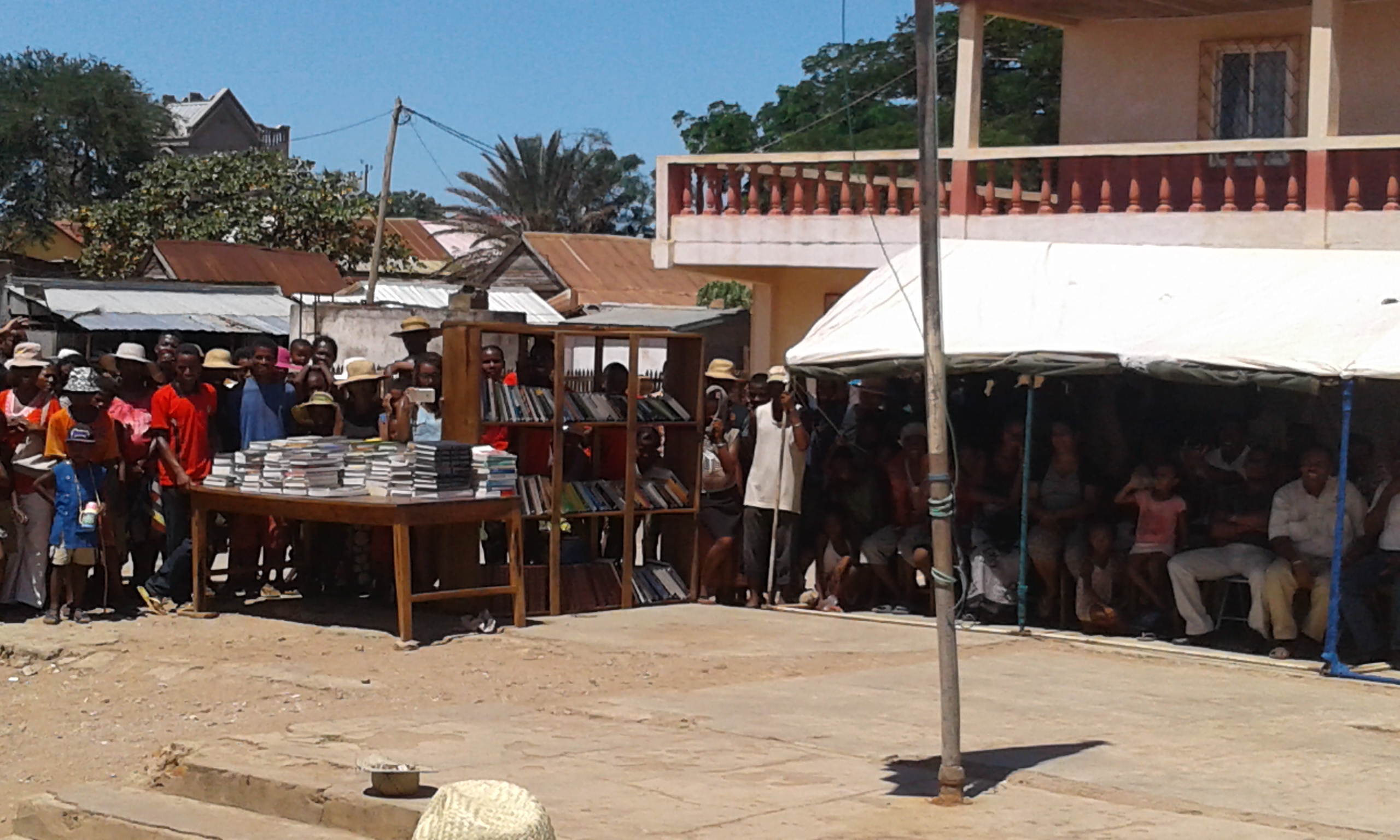
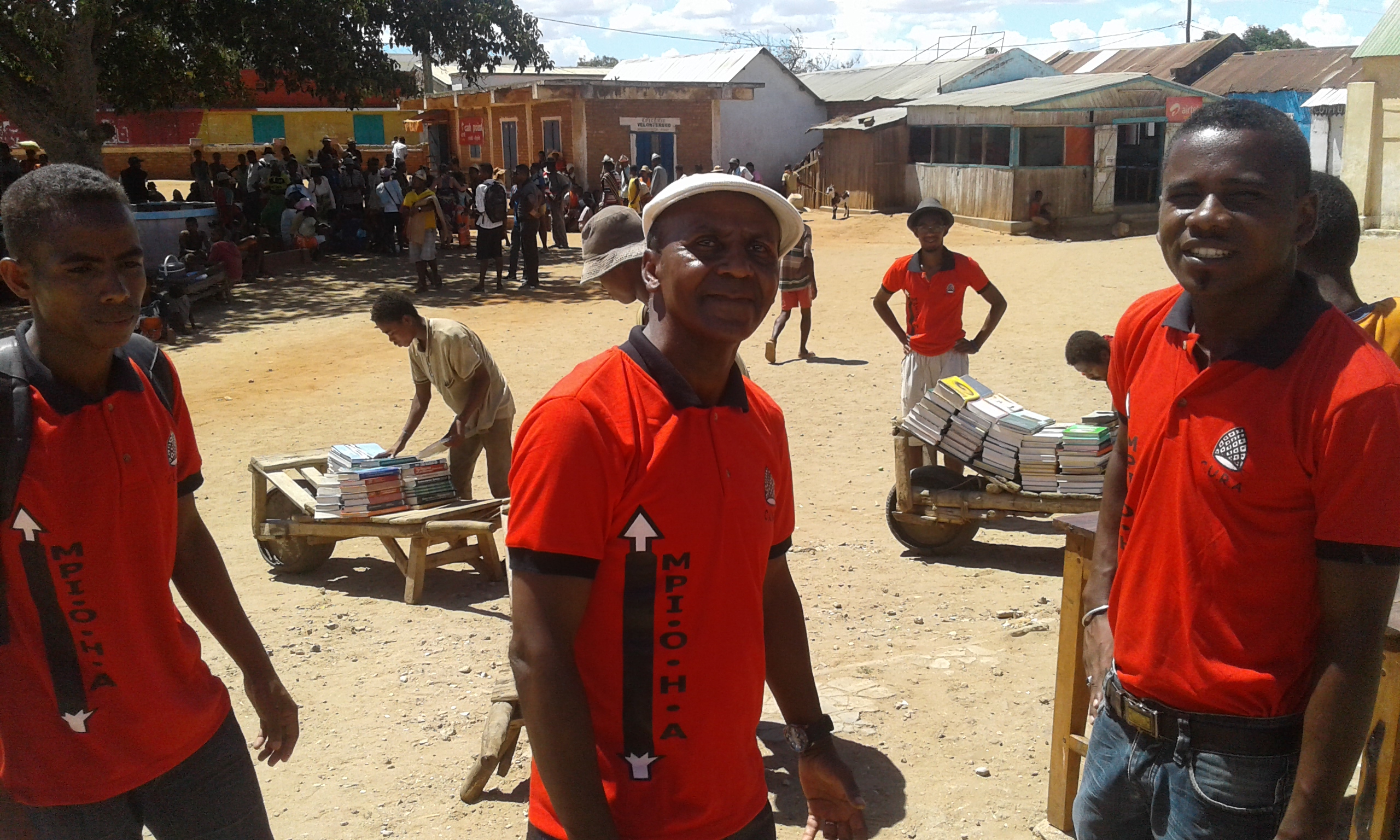
ALT donated Library makes its way from CEL Anosy to CURA Ambovombe

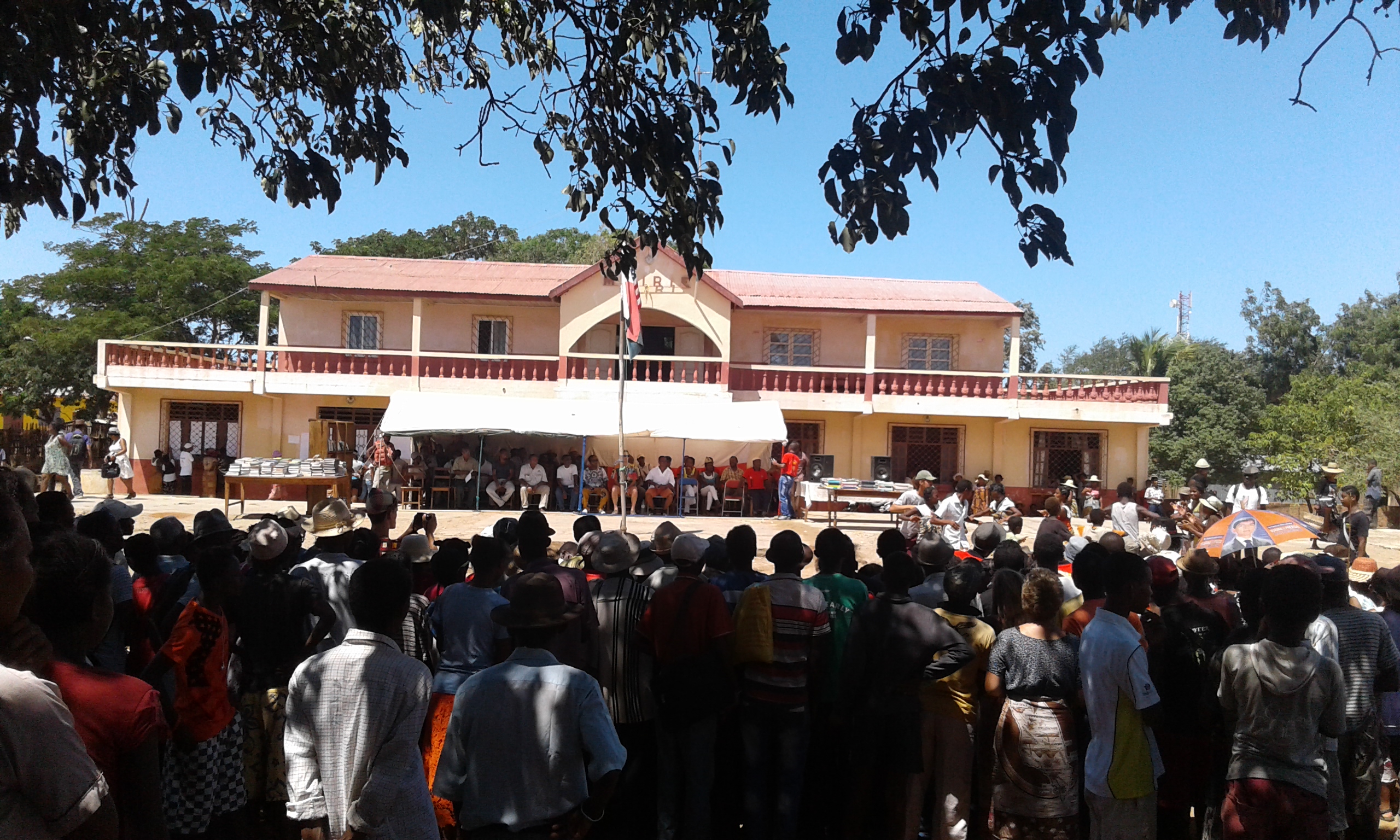
Andrew Lees Trust was delighted to see the delivery of over 400 books to the University in Ambovombe (CURA) in the region of Androy 0n the 9th March 2016.20160309_125602

Nearly twenty years ago ALT sent these books to help form a library at the Centre Ecologique Libanona (CEL) in Ft Dauphin, the Anosy Region, in order to support Malagasy students with their studies – especially with their environmental research and understanding. ALT has subsequently provided environmental students at CEL with bursaries under the Andrew Lees and Marek Mayer bursary awards.

                                                                            Pic right:  Students at CURA with the CEL books

The CEL evolved from a small project launched by the Founders Mark Fenn (WWF) and Raoul Moulder (University of Melbourne) in 1995, with assistance from School for International Training (SIT) , Andrew Lees Trust (ALT) , University of Melbourne and others, into a Malagasy led and run higher education centre offering BAC+ university accredited programmes. Its’ students have received international bursaries, academic and/or technical support from internationals with long standing relations with the region and with the CEL.

20160309_110937

Pic left: the CURA institute in Ambovombe at delivery of the books

Sadly this year the CEL is closing its doors after nearly twenty years of delivering training and higher education to Malagasy students in the south of the island.

In the last few years the mining company Rio Tinto, under the auspices of its QMM Social and environmental programme in Anosy, supported the launch of a new higher education centre in Ft Dauphin (ISTA). It seems there was no consultation about the role or future of the CEL in this planning, or why another centre was needed or opened when one was already present in Anosy; for example why CEL, the existing local higher education facility, was not offered capacity building or expansion supports if an increased local need had been identified. Unfortunately because the new ISTA centre has access to infrastructure and bursaries from Rio Tinto, CEL has been unable to compete.

Hence the local, indigenous led CEL has been lost to the region after twenty years of service to the community. Its excellent track record in student graduation has also served as an important model of local ownership and local leadership in Anosy.20160309_122744

ALT is deeply concerned by unequal power relations and practices of external, internationally driven development in the region, especially any disadvantageous actions that result in   discrimination against or dissolution of indigenous organisations and initiatives, like the CEL.

Pic right: CURA students and teachers at the official hand over of the CEL books

With the closure of the CEL, ALT was happy to join the Association of Friends of the CEL launched by Barry Ferguson last year. It was subsequently agreed with Barry and with ALT Mg , our local partner, that the books donated by ALT over the years to the CEL Library should be transferred to the new CURA University facility in Ambovombe Androy -a Malagasy institute, run by Malagasy, serving local Malagasy populations. As such it fits the ALT criteria of local ownership.

ALT is indebted to Barry Ferguson for shipping the books to Ambovombe, organizing and liaising with CURA, ALT MG, ALT UK and CEL to make this transfer of assets possible.

20160309_125657We hope Malagasy students at CURA  in Ambovombe will now benefit from the library resource,  as students in CEL have done for the last two decades, and we wish them every success with their studies and with the future of the region.

Posted in Uncategorized | Leave a comment

‘Why Women Will Save The Planet’ – ALT joins FoE advocacy on gender equality

THE BOOKOn November 24th Friends of the Earth UK (FoE) realised one of its Big Ideas projects with the publication of ‘Why Women Will Save The Planet’ (Zed books).

The book contains contributions from academics, researchers and practitioners and argues that women are important agents of sustainable development.

Andrew Lees Trust (ALT) has contributed a chapter in this book – reflecting on the role that ALT media projects have played in empowering women in southern Madagascar.

Craig Bennett (FoE) and Yvonne Orengo ( ALT) at the launch

Craig Bennett (FoE) and Yvonne Orengo ( ALT) at the launch

The chapter was written by the ALT UK Director, Yvonne Orengo, in consultation with her Malagasy colleagues Mme Hanitra Raharimanana (Director of Andry Lalana Tohana – ALT Mg) and Mme Charlotte (Radio Producer ALT Mg), who shared their personal perspectives and experience of applying communications as a tool for educational empowerment,  to give voice to local communities, and promote citizen engagement and democratic discourse.

Craig Bennett Director of FoE Uk addresses supporters at the book launch

Craig Bennett Director of FoE Uk addresses supporters at the book launch

Craig Bennett, Director of FoE UK addressed the gathered audience, welcomed the publication and commented that it is extraordinary we should need such a book in 2015!

He announced that FoE was committed to realise full equality in the organisation by 2017.

During the evening many of the book authors joined with representatives from NGOs, media and FoE campaigners to celebrate the launch of the book and to share experiences and ideas in discussion groups.

authors of Why women will save the planet gathered at FoE on 24th November 2015

authors of Why women will save the planet gathered at FoE on 24th November 2015

It was a very inspiring evening and it is hoped the book will be widely shared and read ; most importantly, that it will place women in the forefront of sustainable development and contribute to gender equality both in policy and practice.

You can obtain a copy of the book via this link to the FoE shop :https://www.foeshop.co.uk/why-women-will-save-the-planet.html

FoE have also issued a briefing paper on gender equality and environmental sustainability:

see:http://www.foe.co.uk/sites/default/files/downloads/gender-equality-environmental-sustainability-22099.pdf

Posted in Uncategorized | Leave a comment

Reinforcing Bonds with Friends of the Earth

March 6th 2015

An event was hosted by Friends of the Earth to mark the anniversary of the death of Andrew Lees in Madagascar twenty years ago.

Over 50 friends, family, journalists and former colleagues of Andrew met to celebrate his work as a campaigner and his legacy in the Andrew Lees Trust work in Madagascar.

Andrew Lees

Andrew Lees

The evening was hosted by the recently appointed Director of FoE Craig Bennett with speeches from Tony Juniper, Tony Long, Mary Taylor and Christine Orengo.

The ALT Director presented the Trust’s work to FoE employees at lunchtime, and at the evening gathering.

foe alt event

Christine Orengo talks about Andrew Lees

Posted in Uncategorized | Leave a comment